


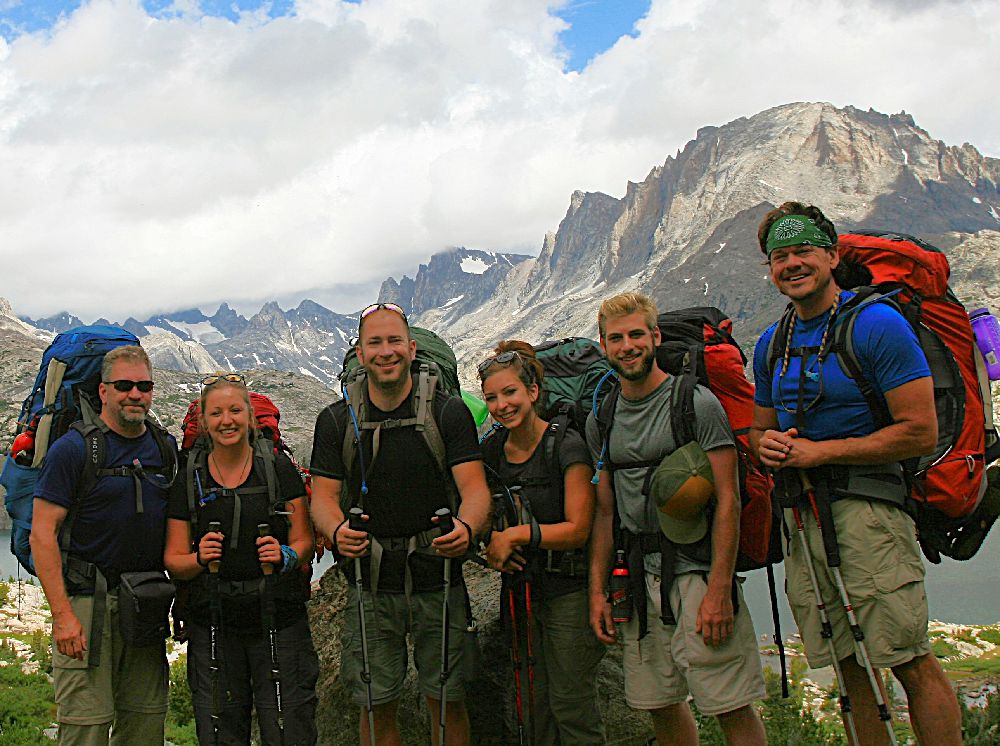
Backpacking is one of our favorite ways to spend time outside, but planning a trip can feel overwhelming, especially when you’re trying to balance safety, regulations, and pack weight. From figuring out where you can park your car overnight to deciding what gear truly deserves space in your pack, even a short backpacking trip requires thoughtful preparation.
One question we’ve wrestled with more times than we can count is: “Do we really need to bring a bear canister?” When it comes to bringing a bear canister backpacking, the reality is that the answer almost always depends on where you’re going and who manages the land you’ll be traveling through.
In this guide, we’ll walk through when bear canisters are required, why they matter, what belongs inside them, and how to use them properly in camp. Our goal is to help you feel confident and informed so you can focus more on enjoying the trail and less on second-guessing your decisions.
Why Do Bear Canisters Matter?
Bear canisters play a critical role in protecting both wildlife and humans. When food, trash, or scented items are left unsecured, wildlife can quickly learn that humans are a source of easy calories. Once an animal, especially bears, successfully accesses food, they remember where that reward came from.
In popular backpacking areas, this can quickly turn into a serious problem. A bear that repeatedly finds food near campsites may begin to associate people with meals, leading to increased encounters and unsafe situations. Over time, these animals often have to be relocated or euthanized, which is an outcome no one wants.
This is why bringing a bear canister backpacking is about much more than following rules; it’s about responsibility and respect. By storing food and trash in a bear-resistant container, you’re helping maintain a natural boundary between humans and wildlife. You’re also contributing to the long-term health of the ecosystems we all love to explore.
What Is a Bear Canister?
Like most backpacking gear, bear canisters have evolved significantly over the years. What used to mean bulky, heavy containers with limited options has expanded into a range of bear-resistant solutions designed to fit different trip styles and environments.
At its core, a bear canister is any container specifically designed to withstand the intelligence, strength, and persistence of a bear. These containers are tested and approved by land management agencies to ensure they meet strict standards.
It’s important to note that while there are multiple styles available today, including both hard-sided and soft-sided designs, not all bear canisters are approved everywhere. Some parks and wilderness areas maintain very specific requirements, down to the exact models that are allowed.
Understanding these nuances is a key part of protecting our natural areas.
Where Are Bear Canisters Required?
Bear canisters are required in areas where land managers have identified a high risk of wildlife accessing human food. This includes regions with active bear populations, heavy backpacking traffic, or a history of food-related incidents.
National Parks are often the strictest, with clearly defined regulations and approved canister lists. Other areas, such as National Forests or Wilderness Areas, may simply require “bear-resistant food storage” without specifying the exact container type.
The most reliable way to determine requirements is during the research phase of planning your trip. If a permit is required, food storage regulations are usually outlined during the application process. If you’re unsure or can’t find the information online, calling the office that manages the area is always a smart move. Rangers and staff are typically happy to clarify requirements and often provide helpful context based on current conditions.
Note that regulations can change seasonally or due to increased wildlife activity, so it’s always worth double-checking even if you’ve visited an area before.
What Goes Into a Bear Canister?
The short answer is simple: anything that smells. But in practice, that includes more than most people initially expect.
Items that should go into your bear canister include:
All food (meals, snacks, ingredients)
Food-related trash and packaging
Cooking items with food residue
Toiletries like toothpaste, deodorant, sunscreen, and lip balm
Medications or supplements with noticeable scents (think a multivitamin chew, or antacid tablet)
Before heading out, it’s a good idea to confirm that everything on this list fits into your canister. Overstuffing or leaving items out defeats the purpose and can lead to unsafe situations.
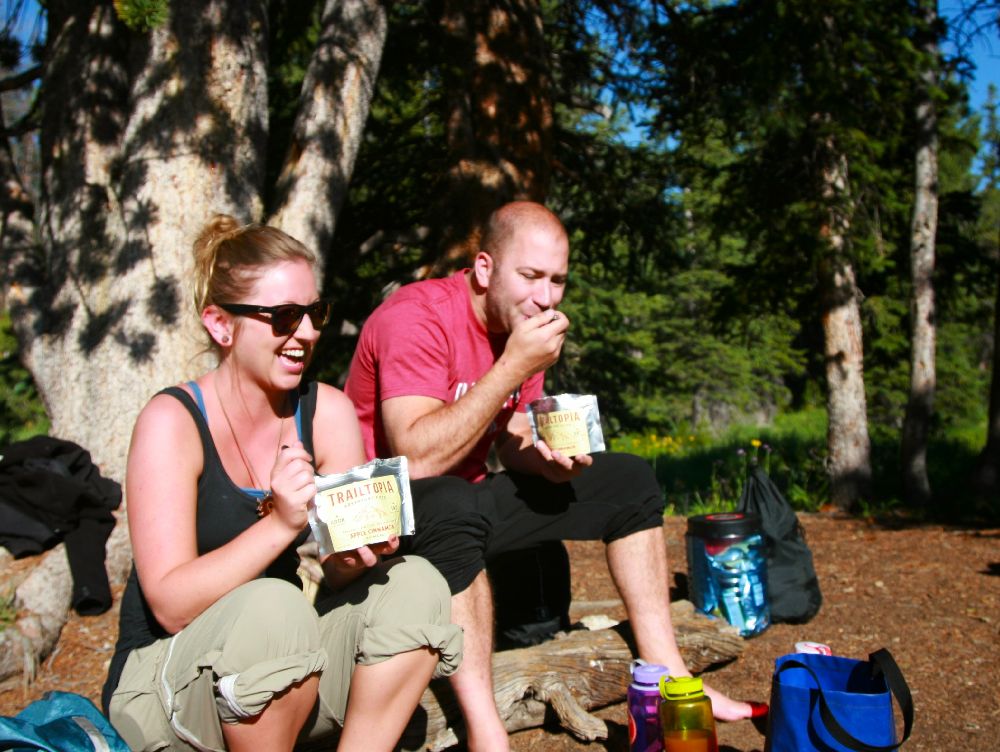
One reason we love Trailtopia’s cook-in-the-bag meals is that they simplify this process. Since your pot is only used to boil water and never touches food, it doesn’t absorb food odors. That means your pot doesn’t need to go into the canister, saving valuable space, something anyone familiar with bringing bear canisters backpacking will appreciate.
Where Do You Place a Bear Canister When Sleeping?
Bear canisters are designed for on-ground use, not for hanging or attaching to other objects. Once you’re finished cooking and organizing your scented items for the night, securely close the canister and move it away from your sleeping area.
There are varying recommendations on distance. Leave No Trace suggests placing your canister about 200 feet from cooking and sleeping areas, while the U.S. Forest Service recommends a minimum of 50 feet (roughly 25 paces). Unless local regulations specify otherwise, 50 feet should be considered the absolute minimum.
Placement matters just as much as distance. Follow these guidelines:
Store the canister on the ground, tucked into brush or behind rocks
Avoid placing it near cliffs or water sources, as animals may knock it around
Do not attach anything to the canister that could help an animal carry it away
Proper placement is a key part of successfully using a bear canister when backpacking and helps ensure your food stays secure overnight.
Why We Sometimes Carry a Bear Canister Even When It’s Not Required
Even in areas where bear canisters aren’t strictly required, we often choose to bring one anyway. Having a secure place to store food and scented items provides peace of mind, especially in regions with known wildlife activity.
Carrying a bear canister backpacking can also simplify camp routines. Instead of worrying about multiple storage systems or campsite selection limitations, everything goes into one container, and you’re done for the night.
The more backpackers adopt bear canisters into their backpacking practices voluntarily, it helps normalize responsible food storage and reduces the likelihood of future restrictions or wildlife incidents.
Final Thoughts on Bringing Bear Canisters Backpacking
Bear canisters are an essential tool for protecting wildlife, fellow hikers, and yourself. With so many options available today, they’ve become a more practical and accessible part of modern backpacking than ever before.
Rules and regulations vary widely depending on location, season, and land management agency, which is why research is always the most important step. Whether you’re heading into a heavily regulated National Park or a quieter backcountry area, understanding food storage requirements is non-negotiable.
At the end of the day, bringing a bear canister backpacking isn’t just about compliance; it’s about stewardship. It’s about ensuring that wild places stay wild and that future adventurers can experience them safely.
Now we’d love to hear from you:
Have you ever had a food-related wildlife encounter while backpacking?